

Teachers fight a constant battle with plagiarism, made worse by the growing volume of information freely available on the Internet at the click of a button. This ongoing struggle is felt by producers of plagiarism checkers like plagiarismchecker.net, which are continually being developed to deal with new threats and methods being used to cheat. It seems that those few students who can’t or don’t want to complete their assignments honestly have always got a new trick up their sleeve to get around university plagiarism detection software. So what’s the latest trick to fool plagiarism checkers like plagiarismchecker.net and Turnitin?
Sneaky students have been taking essays written in another language, running them through a free translator like Google Translate, and passing off the work as their own. This works especially well for foreign language students’ coursework but could be applied to any subject provided the student is smart enough to translate their search into their target language to begin with. Although the free translators produce some rather odd translations, it’s easy enough for them to tidy up the results. Is this a problem plagiarism checkers can tackle?
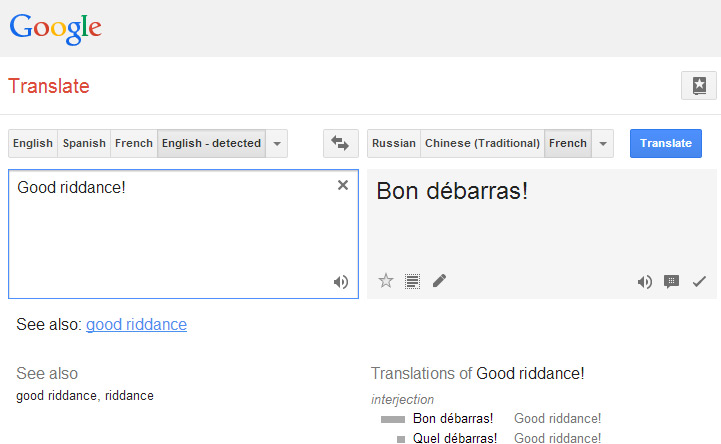
Languages don’t translate word for word to other languages – the word order is often rearranged from language-to-language. The scanner would also have to break down the document, translate it into however many languages are to be checked, and then run those scans against the net, as well as scanning for plagiarism in the document’s language. The process would be complex and time consuming. The solution for this definitely won’t be simple.
So what can be done to tackle this new breed of cheating? Rather than trying to detect plagiarism, maybe teachers should be looking at the root cause. Many students turn to cheating because they can’t complete their assignments themselves. This might be for a whole number of different reasons.
A common reason is that they are an international student who has been accepted onto a course for a higher course fee, and therefore the entry requirements for that course have been relaxed or waived altogether. It’s attractive for both the University and the Government to take on these students, since they pay more and bring more funds into the Country. But there’s very little extra support once they arrive – with universities often stretched already in their resources and unable to provide additional teaching to help those students get past the language barrier.
Other students simply don’t understand their course and struggle, not knowing who to turn to. Lecturers are pushed for time and spread too thinly, and unable to give them the time they need to get through. Larger than expected classes often leave students reluctant to speak up when they’re falling behind.
Where there’s no extra tuition available, there’s an additional cost in time, resources and priority to set up learning support in the first place. So the bottom line is that some students aren’t supported as much as they need to be and it’s usually those students who turn to cheating. Should we focus on trying to detect these students? Or should we focus on preventing the problem by tackling it before they cheat? You decide.
PlagPointer · Plagiarism + AI detection
Highly accurate
plagiarism & AI detection.
Detect copied text, paraphrasing and AI-generated writing in a single scan.
From 18p per 250 words
Both checks included. No subscription. Credits never expire.
- Over 99% AI detection accuracyA highly accurate detection engine with a low false-positive rate in provider testing.
- Search 60 trillion web sourcesCheck for copied and paraphrased text, with 16,000+ open-access journals covered too.
- Detailed, downloadable reportsSee matching sources and AI findings in a clear PDF report, saved to your account.
- Your work stays privateNo notifications to your university or employer. No shared database uploads by default.
*Choose plagiarism detection, AI detection, or both for the same price. AI detection requires at least 350 words.